
From 350 to 42 Million to 10 Drills
By John Kessel
Back in the pre-Internet days as well as in my beginning years of coaching, I bought a book by Bob Bratton of Canada entitled “350 Volleyball Drills” – I still have that book…and looking back through it, I don’t think I am doing/using any of the drills in that book. In my work with the two great international volleyball foundations – both the International Volleyball Federation Foundation www.fivb.org/foundation and the Let’s Keep the Ball Flying Foundation www.lktbf.org – I see the number one need is to guide coaches, teachers and players to winning the learning competition, so the teams then can win the athletic competition.
What is most negatively impactful is that when you google “volleyball drill” you now have over 42 million drills to consider. Sadly 99.99 percent of those drills are not the fastest way to learn our sport. The players standing in lines waiting. The drills done in front of a net. The coach running the drill, tossing, throwing and such. Obstacles to stand on, hop over, run around – none of which will ever be on a volleyball court. Machines with the ball frozen in time, or holding the ball drills, yet reality is we rebound every ball and keep the ball flying and the actual ball on skin contact time is a fraction of the ball in the air time. Did you know spiked ball contact time is .008-.01 seconds total – ie 100 spikes add up to 1 second of contact?
As the most important “skill” in our sport is reading/anticipating what is really happening – Training in Reality as we should be – tens of millions of these drills are not worth doing. It may come as a surprise but national teams, those in the 1 percent, are basically using less than a dozen drills/games in training, just using scoring and other constraints, but keeping all training in the reality of the game. Your job is to critically think when see a new drill – does what my players learn in this drill actually transfer to their performance in a match? Sadly most coaches are practicing for practice, and not for performance.
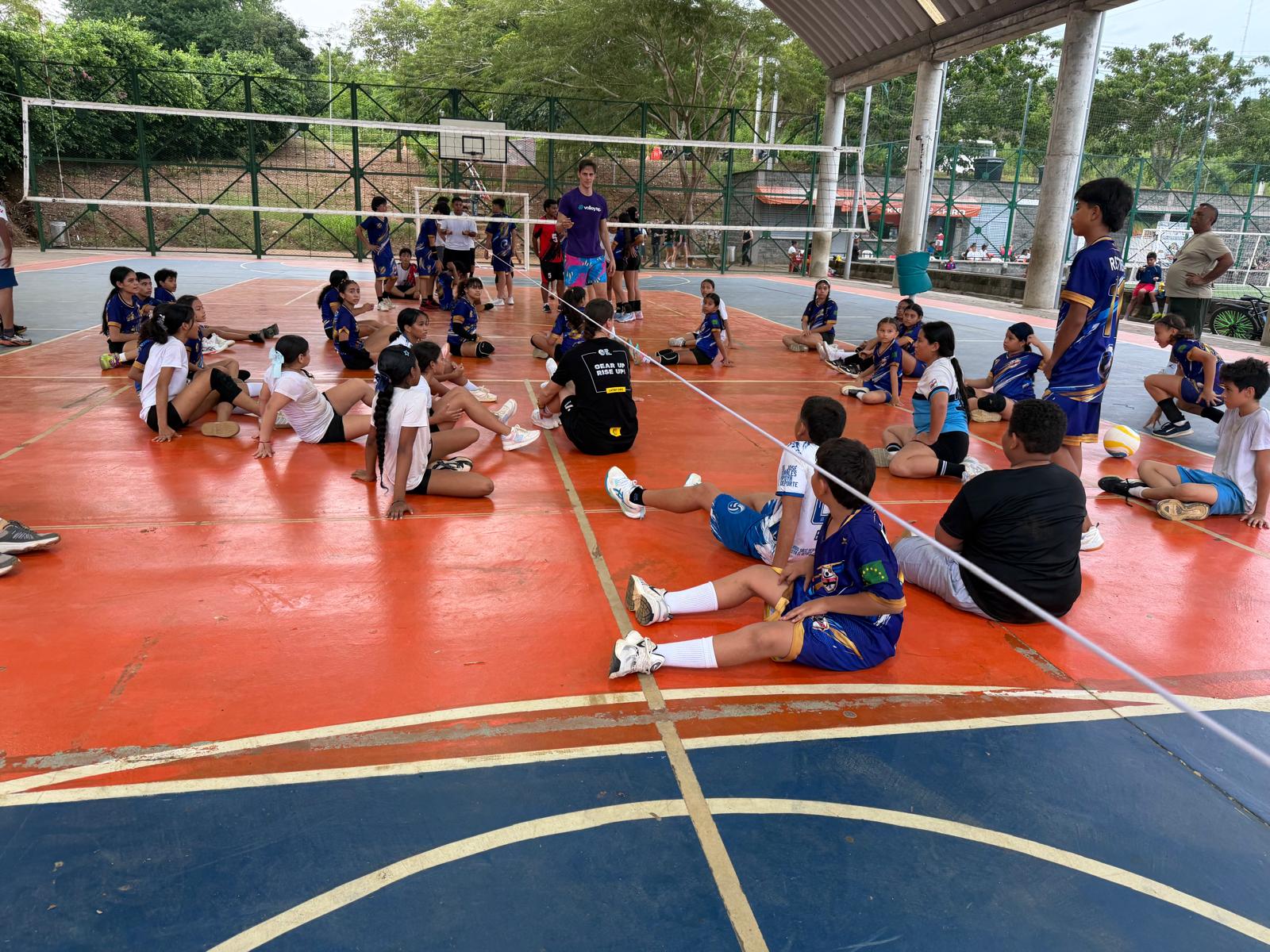
Nearly every site in the over 100 nations I have taught leaders in, the volleyball space has just one net, and from 24 to nearly 100 athletes. Since our game at the core level is simple 1. SERVE (OVER a NET) 2. SERVE RECEIVE (towards the NET 3. SET (along the NET)) 4. HIT over a NET (against a blocker possibly) 5. DIG (towards the NET – and keep the ball off the floor. Yet everywhere we go, with the net, while up, is ignored – and training happens mostly in coach controlled drilling from the same side of the net. A decade ago, Karch Kiraly shared this about the science of learning.
“Science has shaped everything we do in the gym in terms of developing players. We are trained to perform not to drill. All of the science tells us that we do the most learning when practice looks like an actual game – which is really random and not just super controlled. That governs just about everything we do in the gym. We’re trying to make every second in our gym count as much as possible to make the most transfer that we can get.”
What I simply see world wide is training false confidence. I can do 100, even 1,000 in a row partner passes and digs. What am I learning? Not “ball control” – I am learning to play tennis, ping pong, not 3 hit volleyball. So when I become the world’s best wall passer, I am baffled as to why I can’t read and receive a serve successfully because my coach teaches me these things and yet I fail in the reality of serve reception – which begins by watching the posture and actions of a server thru the net and before they even make contact on the serve. Why is this so crucial to success in playing our game? Because if you can’t win the serve/serve receive battle, you lose most all of your matches. From 11 and under to the Olympic level.
So what we need to do at this level of the 99 percent, where the world’s players learn our sport and its uniquenesses in just a practice a week or even no practice, is to:
Create as much over the net opportunities in our learning space as possible. This does not have to be a full real net. It can be a rope, ribbon or line on a wall that is put at net height.
Get enough volleyballs so the players can learn over this “net” in groups of 2 or 3, not 12.
Corral the errant volleyballs by walls or netting, or a teammate – so players stay on task and lessen the amount of chasing the balls.
Create stations of learning in smaller groups – on leadership, conditioning, mental toughness and such – if you only have 2-3 volleyballs and 24 or more athletes.
Have them perform/understand each basic technique in our sport with a volleyball – showing you they get the fundamental movement concept – then help them learn to do those in the right place and time in the speed of our rebounding game. Most technique “errors” are caused by being in the wrong place at the wrong time, not technique misunderstanding. You can’t “REACH” for a spiked ball if the ball is by your ear.
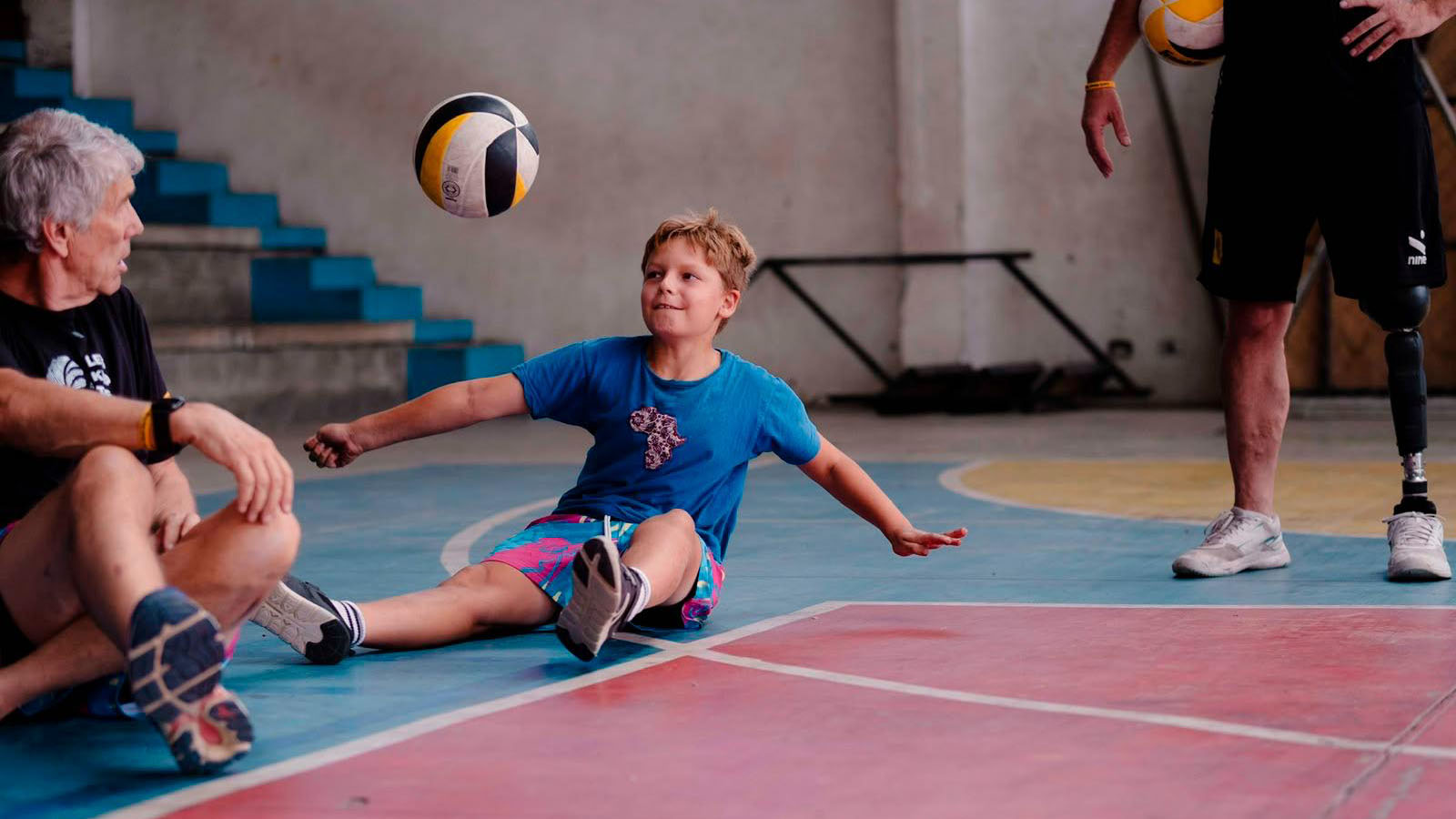
Focus on your space being a place to explore the game, such that mistakes are simply seen as a part of learning, and where the culture of play (not waiting to be told what to do), includes a focus on making “positive” vs. “negative” errors – a stand alone topic that can be seen in the “Coaching for the 99 Percent” single and four pages free booklets.
In learning over the “net” start with smaller courts, not just smaller teams (ideally 1v1, 2v2, and 3v3), but smaller court boundaries – wide but shorter, narrow but longer or square but narrower and shorter. Expand over time to 6×6 meters and 4v4. Finally, if the program competition requires, play 9x9m and 6v6. This applies to ANY aged beginner.
As the most gamelike training is a match with scoring, don’t forget to include forms of scoring (in a row, cooperative scoring, X out of Y, X before Y, X in Y amount of time, etc.). Use “wash” scoring forms so that once the ball hits the floor, another ball comes in live over the net, no waiting for a serve. Use winners stay on scoring including “speedball” serving where a ball is served the instant a ball hits the floor. Consider this concept – if you only have one ball in the air above your court space, you should just be scrimmaging. The goal is to get 2 or more balls in the air over your court space.
After all, this is a learning competition, not just an athletic one…50 years ago I talked 90% and Listened 10%; now I talk 10% and listen 90%. Similarly, 50 years ago I taught 90% new drills and used 10% over the net games; now we play 100% over the net games – including all warming up – and teach new constraints and scoring, but no new drills. For it is true, the game does teach the game, while we coach the person, not just the player…